
From
Blade segments and GFRP scrap
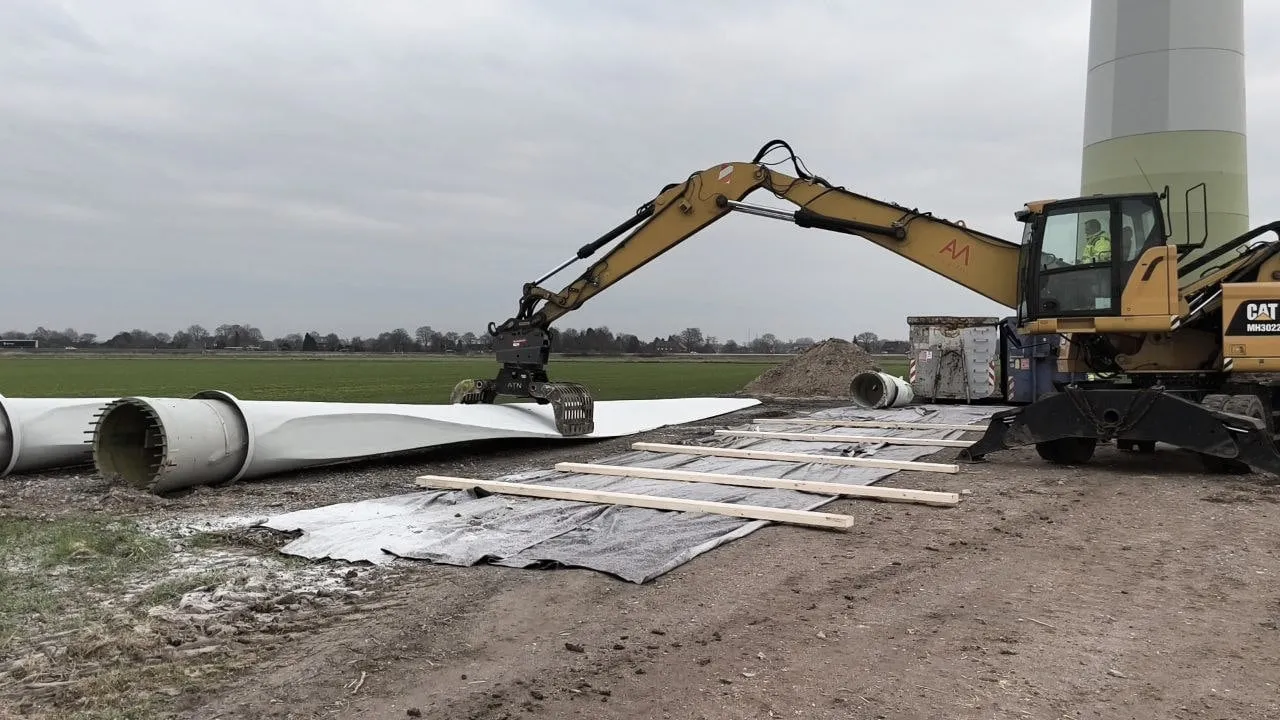
End-of-life rotor blades, production cut-offs and rejects — taken as they are and cut to chamber size.
We take your composite wasteComposite recovery — GFRP / CFRP
We turn end-of-life wind turbine blades and composite production scrap into recovered fiber for new manufacturing — with an evidence record for every batch.
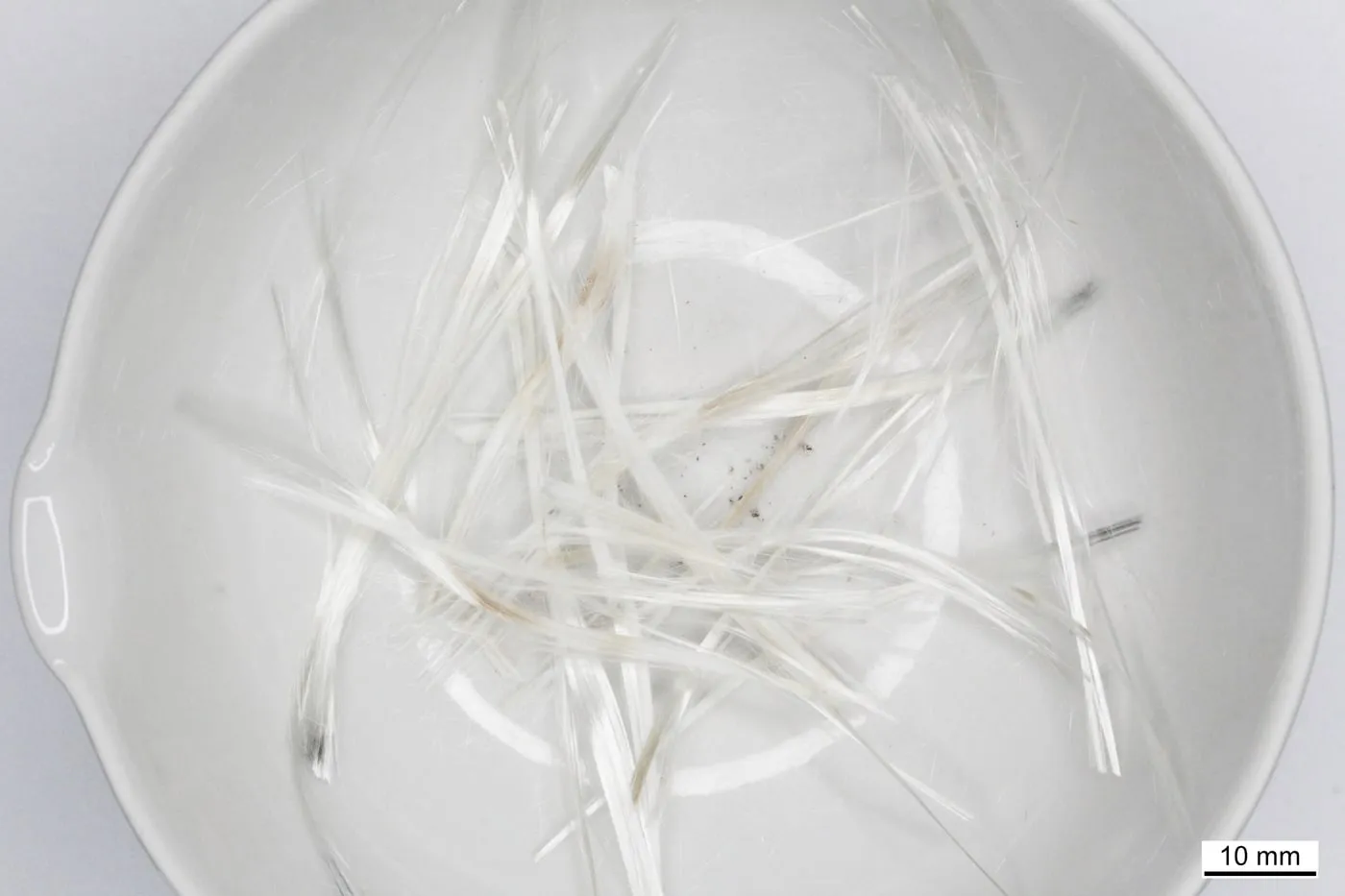
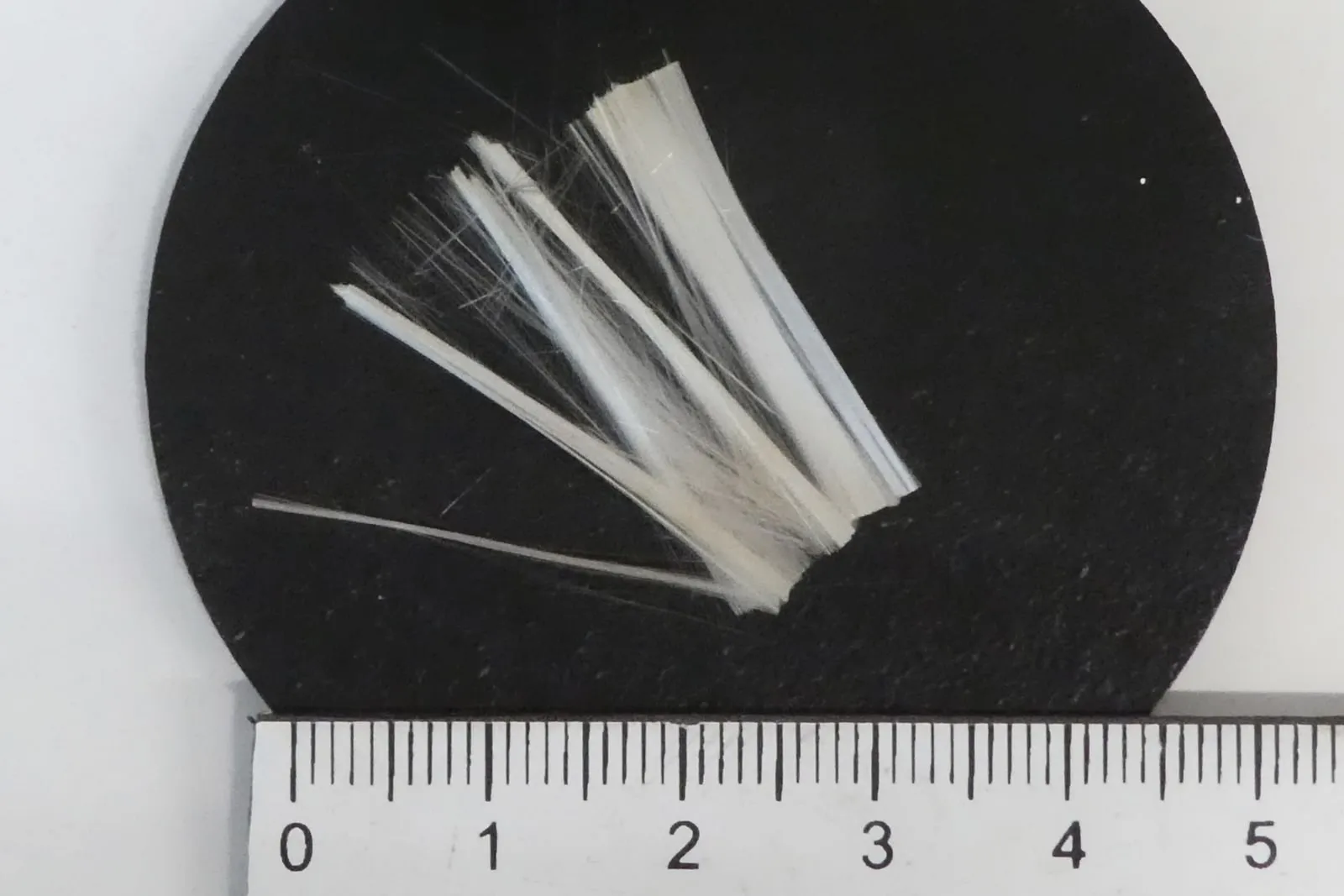
Recovered glass fiber from a blade fragment, 2026
Composite waste isn't hard to get rid of. It's hard to bring back into manufacturing.
01 Problem
914kt
of thermoset composite waste in Europe in 2025
Modelled estimate for EU27, UK and Türkiye.
228kt
realistically accessible for recycling each year
≤ 5%
of that accessible stream is recycled today
52kt
of decommissioned blades a year in Europe by 2030 — up from about 25 kt in 2025
Germany and Spain carry the largest flows.
Landfilling rotor blades has not been permitted in Germany since 2005, and Europe's wind industry has committed to re-use, recycle or recover every decommissioned blade. Today a large share of GFRP still ends up in cement kilns or lower-value products — the fiber is lost.
The recovered material needs a new application.
02 Why it is still unsolved
Recycling technologies exist. What is missing is a route that connects feedstock, processing, quality and the buyer.
03 Our route
We manage the recovery of composite material and document the result of every batch.
From
End-of-life rotor blades, production cut-offs and rejects — taken as they are and cut to chamber size.
We take your composite wasteTo
Long recovered glass fiber for new products, and a glass fraction as feedstock for new glass fiber.
Buy recovered materialComposition, resin type, laminate thickness and impurities set the preparation and process regime.
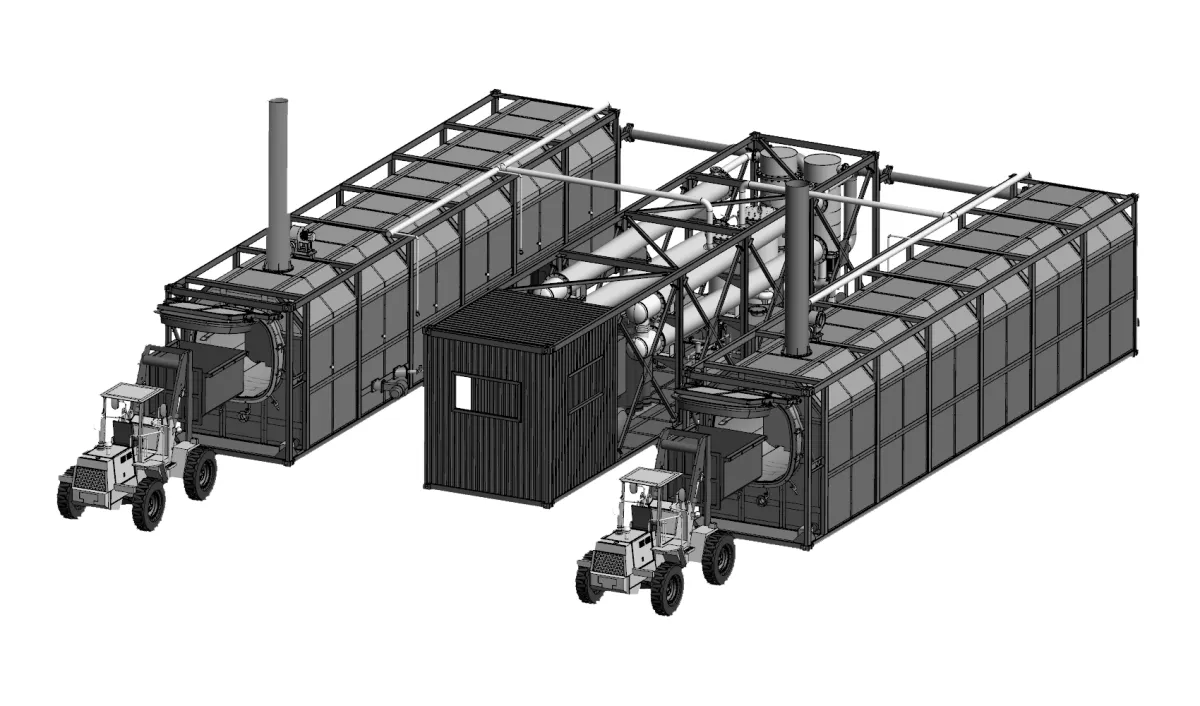
Containerized modules at existing sites. Capacity grows with feedstock flows and sales.
Post-treatment and testing against agreed criteria — for fiber reuse or for remelting.
The Digital Recovery Record links origin, process, mass balance and analyses to the decision.
04 How it works
The fiber is the product. Every step is built to keep it long, clean and documented.
Laboratory card · SC-B-0001
MPA-IfW · FTZ Leipzig · ASG Analytik · FIBRE
Digital Recovery Record
Batch · SC-B-0001
Illustrative example · record in beta
We start with the material: composition, impurities, thickness — and what the future buyer needs.
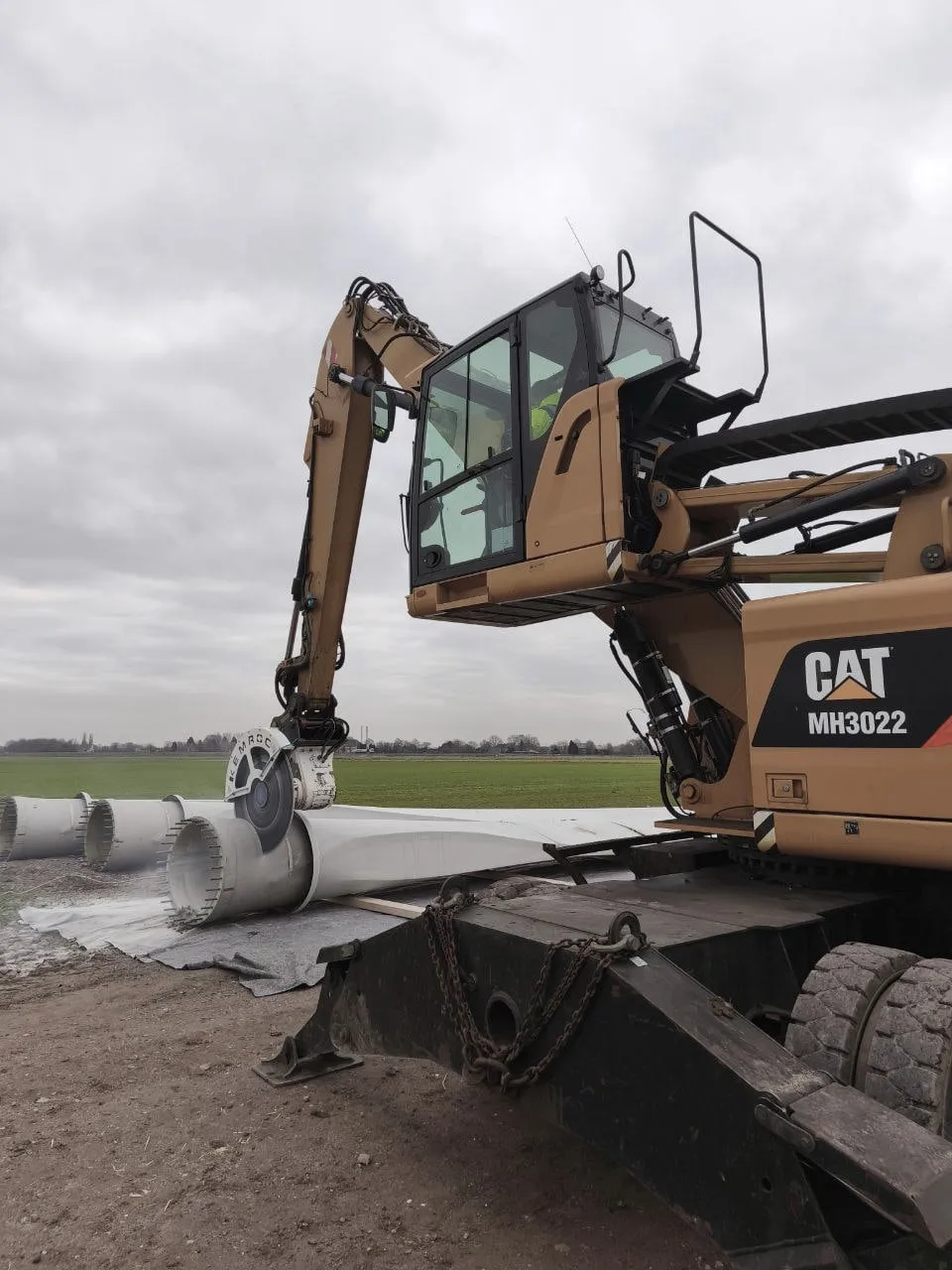
Blades are cut on site into segments of about 1 × 1 m — not shredded — so the fibers stay long, up to about a metre.
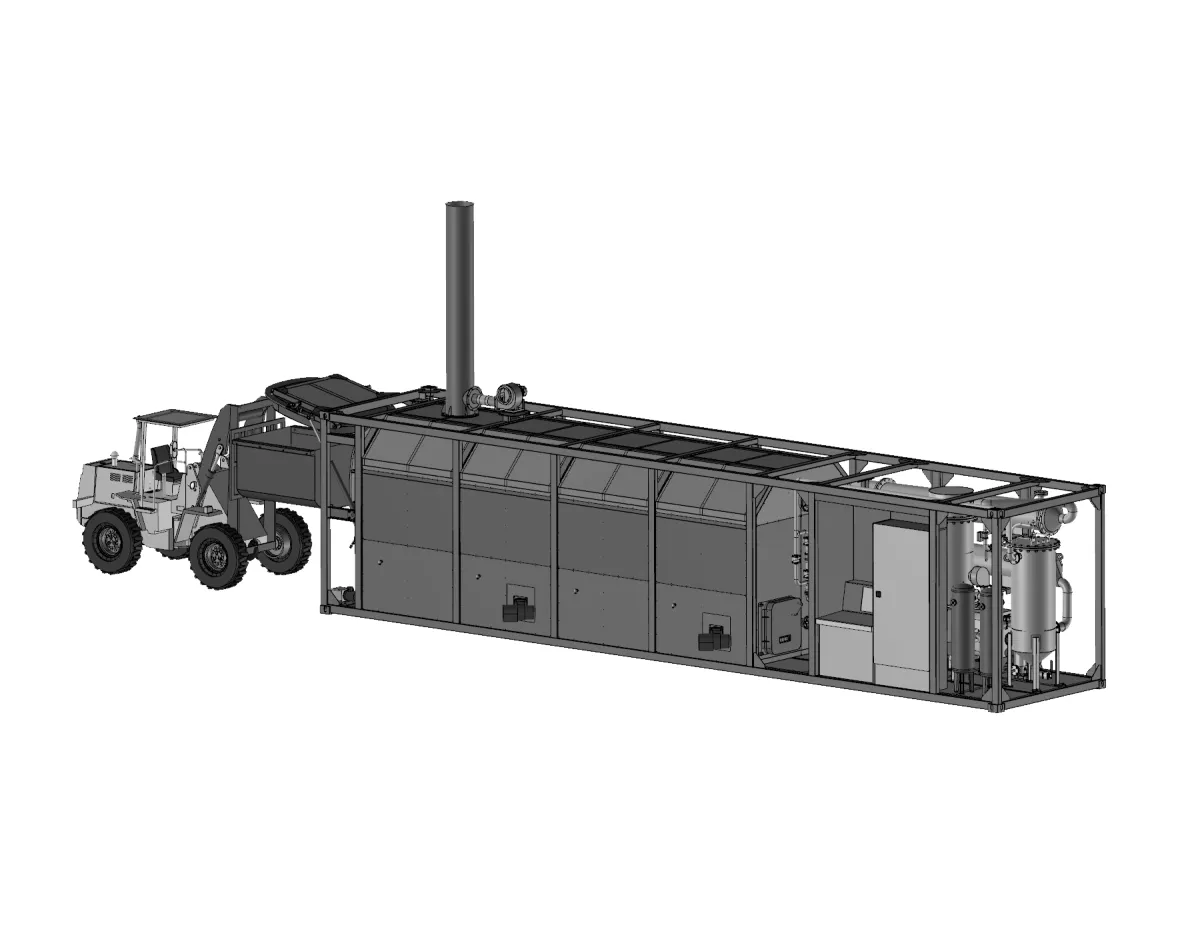
Oxygen-free pyrolysis at 400–550 °C. The resin breaks down into oil and gas; the fibers stay.
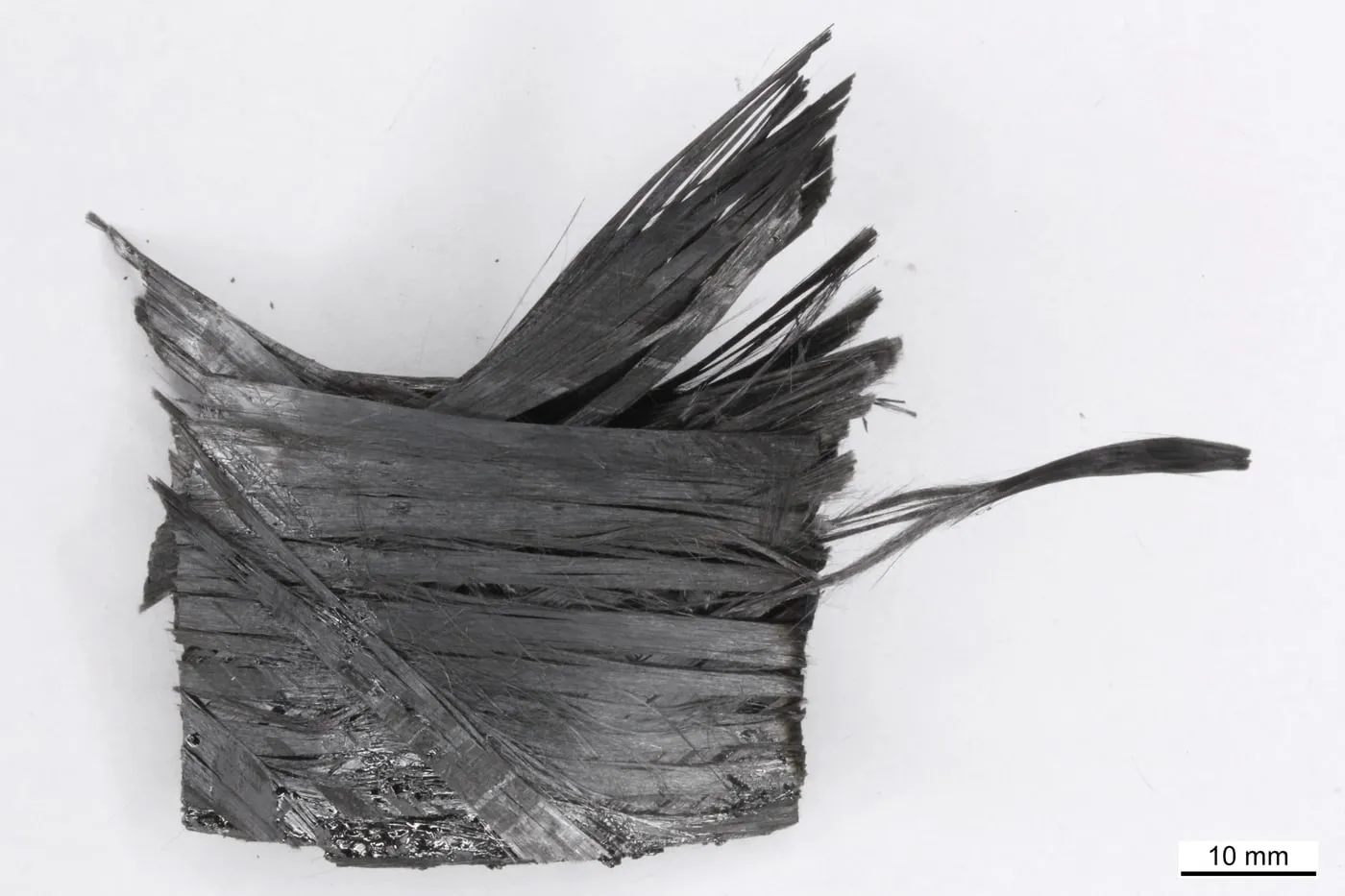
Controlled post-treatment removes matrix residues. Black, bonded fiber becomes white and separable.
We test against agreed buyer criteria and classify the fiber: length, organic residue, glass chemistry, purity.
Origin, process, mass balance and analyses — linked to the buyer's decision in one batch record.
Schematic — not to scale. Process parameters depend on feedstock.
We start with the material: composition, impurities, thickness — and what the future buyer needs.
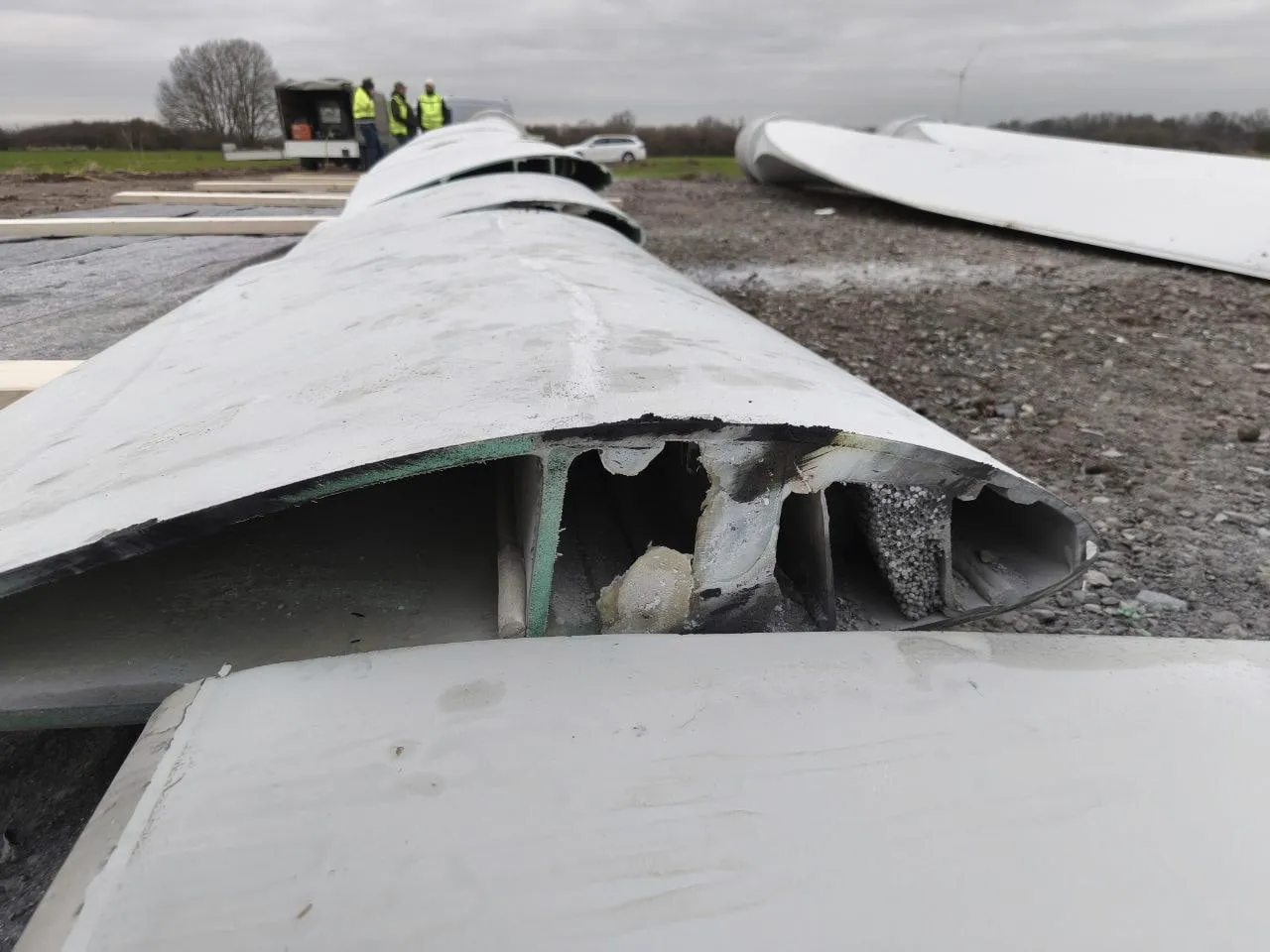
Blades are cut on site into segments of about 1 × 1 m — not shredded — so the fibers stay long, up to about a metre.
Oxygen-free pyrolysis at 400–550 °C. The resin breaks down into oil and gas; the fibers stay.
Controlled post-treatment removes matrix residues. Black, bonded fiber becomes white and separable.
We test against agreed buyer criteria and classify the fiber: length, organic residue, glass chemistry, purity.
Origin, process, mass balance and analyses — linked to the buyer's decision in one batch record.
Batch · SC-B-0001
Illustrative example · record in beta
Schematic — not to scale. Process parameters depend on feedstock.
05 Outputs
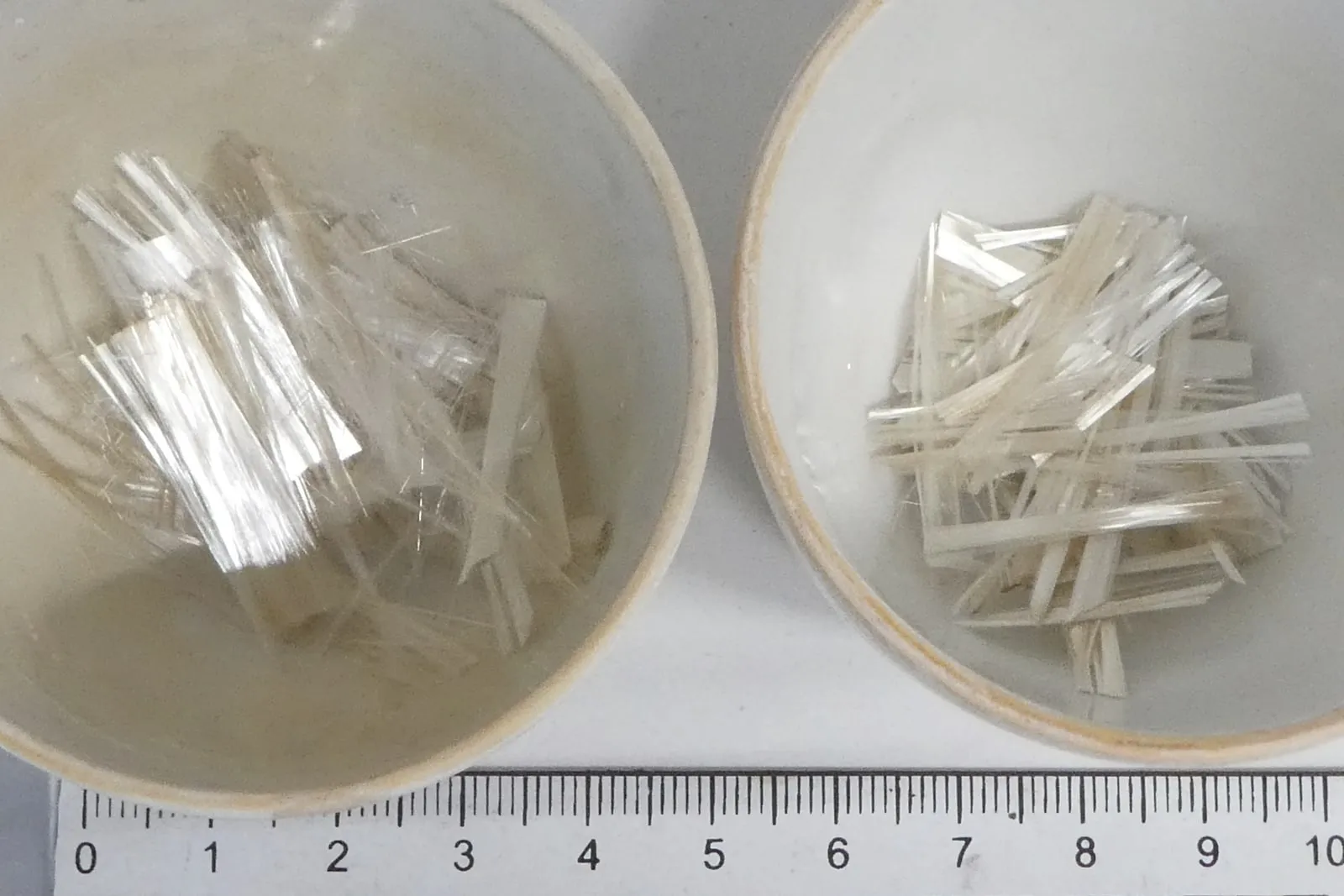
Long fibers for nonwovens and composite intermediates.
Samples with buyersFeedstock for the production of new glass fiber.
In evaluationComposition analysed; the route for its use is under evaluation.
AnalysedReturned to heat the process; measured in the industrial pilot.
Measured in pilotFiber grades by length and cleanliness — coming with the industrial pilot.
Request fiber samples and data06 Industries
We start with rotor blades and GFRP production scrap. The assessment is open for every other composite stream today.
End-of-life and repowering blades
Blades come down faster than qualified routes appear.
We take segments from decommissioning sites and recover the fiber.
Cut-offs, rejects, cured laminate
Scrap is paid for twice: once as material, once as disposal.
We screen the stream and recover fiber close to the source.
Hulls and moulds at end of life
Decades of GRP hulls have no route back into materials.
We assess what the laminate can become before anything is cut.
Body panels, interior parts, SMC
Mixed laminates and fillers make recovery hard to predict.
We test the stream and document what comes out.
Carbon fiber laminates and prepreg scrap
High-value fiber needs its own qualification path.
We run CFRP as a separate, documented assessment.
07 Evidence
We publish what was measured, who measured it — and what the industrial pilot measures next.
All tests start from end-of-life rotor blades, cut on site.
Decommissioning partner
Blade segments processed in a partner's industrial reactor; first mass balance recorded.
Technology partner
Macroscopy and SEM/EDX before and after thermal post-treatment at 400 °C.
MPA-IfW, TU Darmstadt · report F 260733
Light microscopy, SEM and EDX mapping of fiber surfaces.
FTZ Leipzig · HTWK Leipzig
Laboratory analysis of the pyrolysis oil fraction.
ASG Analytik
Tensile tests on individual recovered glass fibers, 25 measurements.
Faserinstitut Bremen (FIBRE) · report AU-261013-8347-3
Glass fiber and nonwoven manufacturers are evaluating recovered fiber.
Material buyers
Repeat batches on a real waste stream.
SustainCore with partners
First run · partner data · n = 1
08 Start here
The Composite Recovery Assessment is stage one of the recovery route: a physical recovery test, independent laboratory analyses and a documented decision — at a fixed price.
Is this material worth investigating?
€2,900 excl. VAT
Go / Investigate / No-go
Can it become a credible secondary material?
€8,500 excl. VAT
Stop / Optimise / Validate at scale / Prepare a pilot
What exactly should a pilot prove?
€19,500 excl. VAT
Pilot go / no-go
Twenty minutes: your material, your volumes and the decision you need.
You send a sample and what you know about it.
Recovery test, independent laboratories, application check.
A documented result for your management — with the batch record.
We can also tell you no. That is part of the value.
Results depend on the sample provided and are directional — not a guarantee of recovery performance, yield or commercial viability at scale. Laboratory results are coordinated third-party data.
09 Hub formats
We choose the format to fit the flow, the partners and the site.
We invest through a project company together with investors and operate the plant.
The partner owns the plant on its own brownfield site. We run the route and quality assurance.
Joint investment and management through a shared project company.
Brownfield first: existing industrial infrastructure and permits, usable in any format.
Two revenue streams per tonne: a gate fee for the waste and the sale of qualified fiber.
10 Scale
A containerized module at an existing industrial site.
Several chambers on one condensation line.
≈ 10,000t/yrtarget per hub
Regional hubs across Germany and the EU.
50,000t/yrtarget by 2033 · 5 hubs
Written opinions on quality and application of the recovered fiber.
Repeat batches on a real waste stream. Full per-tonne economics.
First hub, scaled to flow and sales.
Roll-out in Germany and the EU.
Capacities are targets from our engineering model — not installed capacity.
11 Digital Recovery Record
The record links origin, process, mass balance and analyses to the buyer's decision. Waste owners use it for ESG and CSRD reporting, buyers for qualification, auditors by permission.
Digital Recovery Record
Batch · SC-B-0001
Illustrative example · record in beta
12 Impact
Regional hubs on existing industrial sites.
Fiber and glass return to manufacturing; mass tracked per batch.
The CO₂ effect is determined by a comparative LCA built on batch data.
Waste owner, host site and buyer in one route.
Framework: UN Sustainable Development Goals. Referring to the goals does not imply endorsement by the United Nations.
13 Team
CEO & Co-Founder
Engineering and business development. Deployment of pyrolysis systems, partnerships and commercialization. More than 10 years of delivering technical projects.

CSO & Co-Founder
PhD in chemistry. Development of pyrolysis processes, material analysis and post-treatment. Almost 10 years of laboratory and applied work.
14 Questions
Landfilling has not been permitted since 2005, so blades go to co-processing in cement, to lower-value products — or into a recovery route. We take blade segments, recover the fiber by pyrolysis and document every batch. The first step is a Recovery Screening of your material.
Our focus today is GFRP from rotor blades and production scrap. CFRP follows its own qualification path and is handled as a separate assessment. For any other composite stream, the Recovery Screening shows whether a credible route exists.
Fiber properties depend on the process regime and the post-treatment, and they are measured — not assumed. Independent laboratories have examined fiber surface and morphology; the industrial pilot measures properties against buyer specifications over repeated batches.
Cement co-processing uses the composite as fuel and mineral input; shredding turns it into filler. In both cases the fiber is gone. Our route keeps the fiber long, cleans it and qualifies it for a new application.
A material and problem assessment, a screening of possible recovery routes, an initial sample test where it is technically justified, and a decision memo: go, investigate or no-go. It costs €2,900 and comes with a basic Digital Recovery Record.
Yes — that is the partner hub format. The containerized modules are placed on an existing industrial site with infrastructure and permits; we run the route and quality assurance. We start with a site assessment.
It is a structured batch record: what entered, what happened, what came out, how it was tested and what was decided. Waste owners use it as documented evidence of the downstream route for their reporting.
Yes. Tell us your application and the parameters that matter to you. We provide samples with the available analyses and involve you in defining the criteria for the industrial pilot.
Expand on your timetable.
We reply within two working days. vk@sustaincore.de +49 160 325 2571